



Hey there! Have you ever wondered what happens to the money you get from your allowance, chores, or birthday gifts? Every single dollar has four important jobs. Learning how to handle these jobs is like becoming a money superhero–it helps you buy cool stuff now, save for big dreams, and even make the world better.
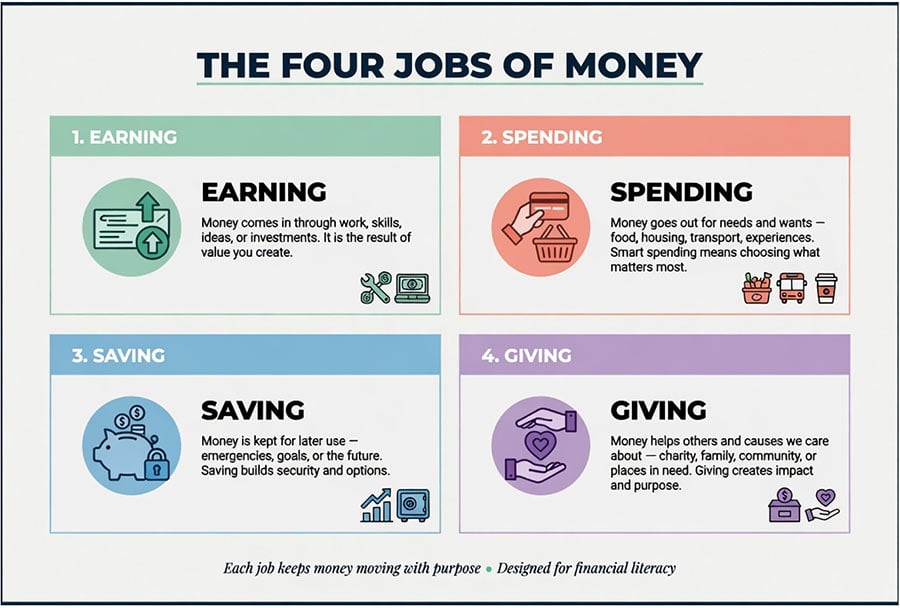
Let’s break down the four jobs of money with fun examples and real facts.
Earning: Where Money Starts
“Earning” is how money first comes to you. It’s like the “on” switch for getting cash. There are lots of ways to earn money, but some popular ones among adolescents are mowing lawns and babysitting. And because very few kids are earning for survival at this stage of life, most of those earnings are ‘extra’ money where each must decide what to do with it.
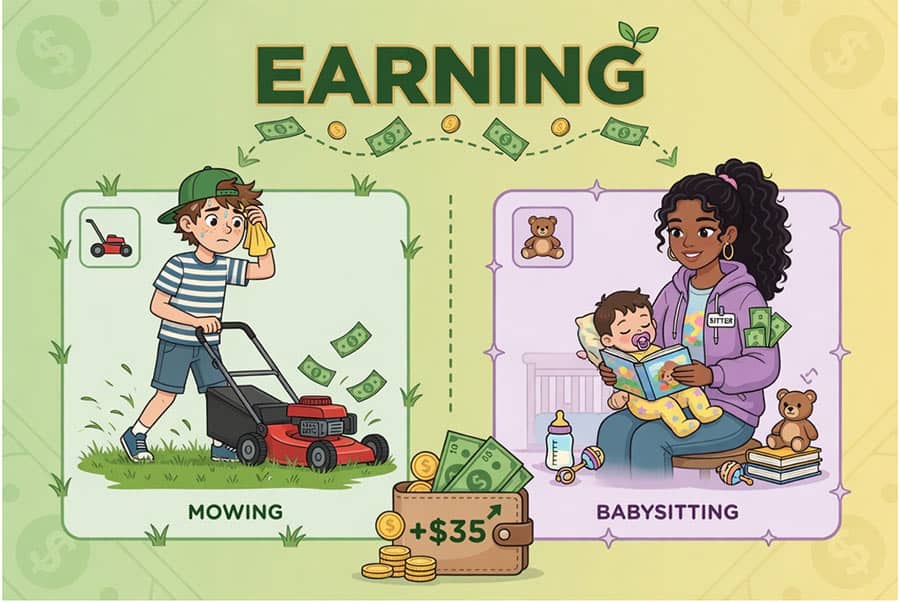
Kids like you earn money in lots of creative ways:
- Doing chores or getting an allowance from parents
- Mowing lawns or shoveling snow
- Babysitting or pet sitting
- Selling lemonade or crafts at a yard sale
- Putting up / taking down holiday decorations for people in your neighborhood
- Selling digital art online
- Virtual Tutoring with younger kids who need help with math or reading
- Setting up a car wash in your neighborhood
- Walking neighbors dogs while parents are at work
So, how much can you earn? It depends on a lot of things, like what price you charge, how often you do it, how you communicate your offer, etc. But all these alternatives are in addition to what you might have from your allowance. More importantly, you will begin sharpening your business skills where the principles of business can serve you for a lifetime. On a personal level, if you look at it as a contest to continuously improve, then you can learn a timeless lesson of life: that leadership, commitment, character and personal growth are the foundations upon which success in life is built. And if you internalize that lesson, then the sky is the limit.
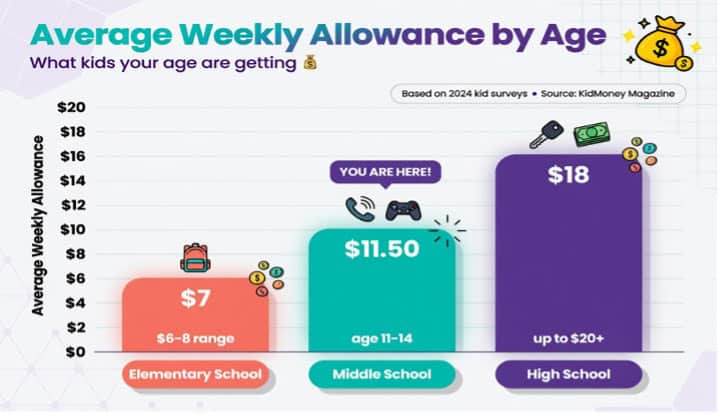
Cool Fact: Middle school kids (ages 11-13) in the US often get between $8 and $15 per week in allowance on average. Younger kids get less and older ones get more. Some get even more if they help with extra jobs around the house! Imagine earning $12 a week in allowance. That’s over $600 in a year!
Now imagine that on top of your allowance, you decide to do at least 5 car washes every Saturday. If you charge $20 / car wash, you can promise you’ll provide a better car wash than the big industrial carwashes because you do it by hand and deliver excellence. In fact, you can market yourself as a “Mobile Carwash” where you come to their house and clean cars right in their own driveway. They don’t even have to leave the house – even the big guys can’t promise that! Then you can get steady customers and make $100 each Saturday. And if you did it 50 Saturdays per year, you would earn $5,000 just from washing cars. Add it all up and you’ve now made $5,600. That’s real money!
Spending: Buying What You Need and Want
“Spending” means using money to get things you need or want. But the more you spend today, the less you can spend tomorrow. So, when you earn money, you are immediately confronted with this choice: spend today – or – spend tomorrow? Put it in the piggy bank, or run out to the mall and blow it all? Or, you may be prudent in the way you approach spending. The choice is yours.
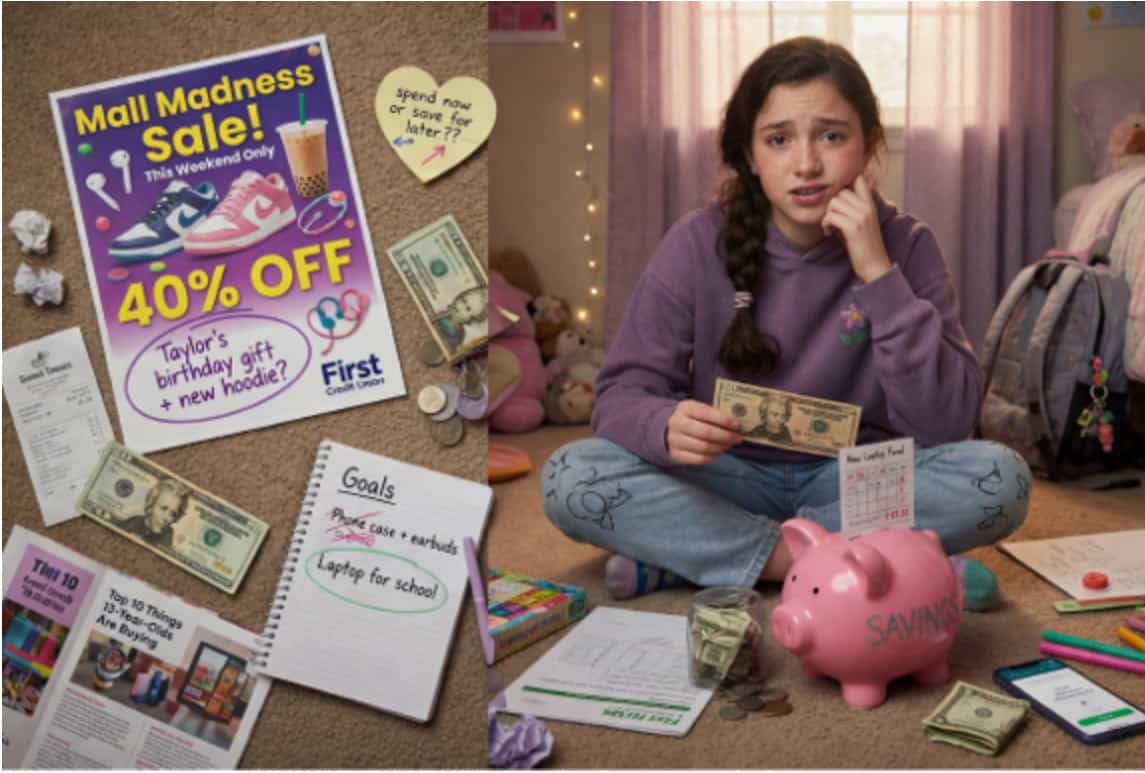
Your spending could be on:
- Snacks or school lunch
- New clothes or sports gear
- Video games, books, or movie tickets
- Gifts for friends or family
Common kid spending goes toward food/snacks, clothes, entertainment (like games or apps), and fun outings with friends.
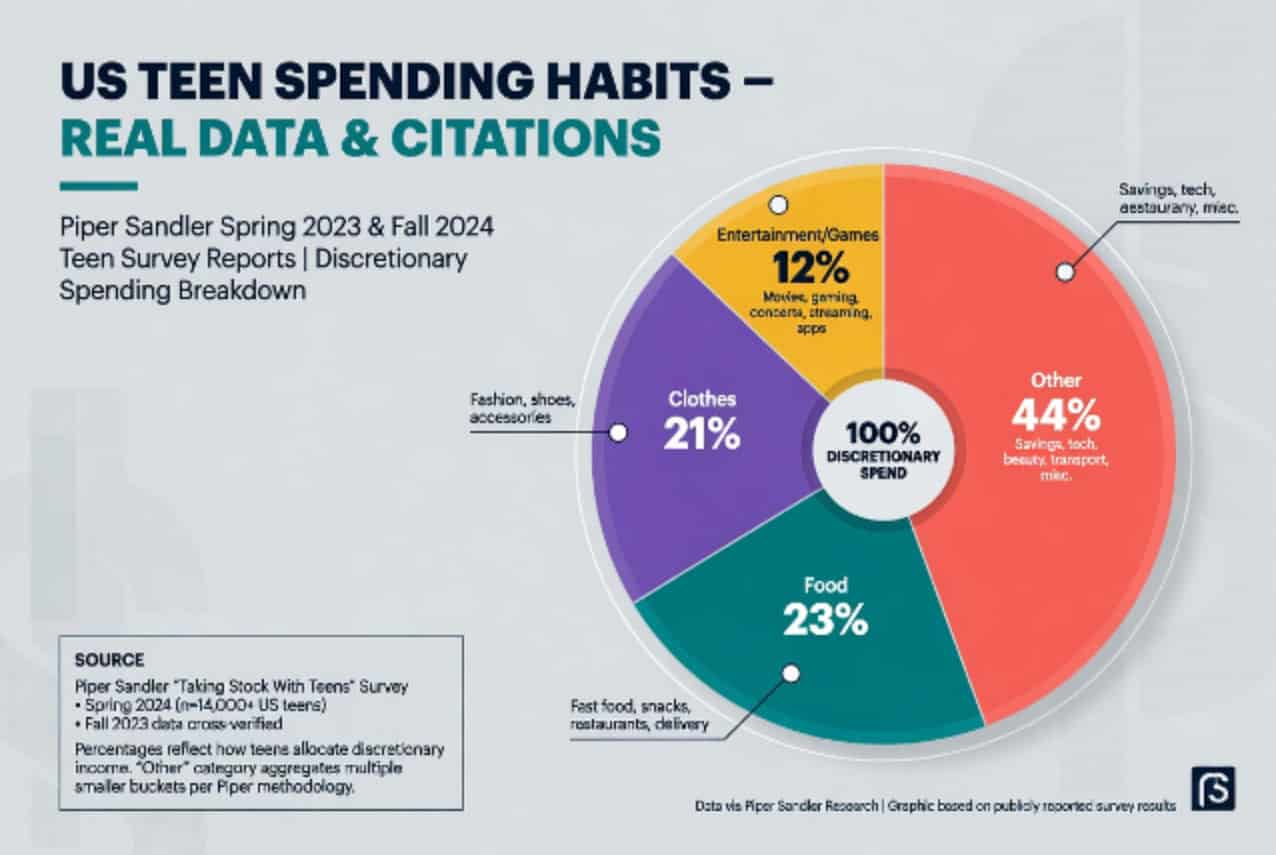
Spending is awesome, but smart kids think before they buy: “Do I need this, or do I just want it?”
Saving: Money for Later
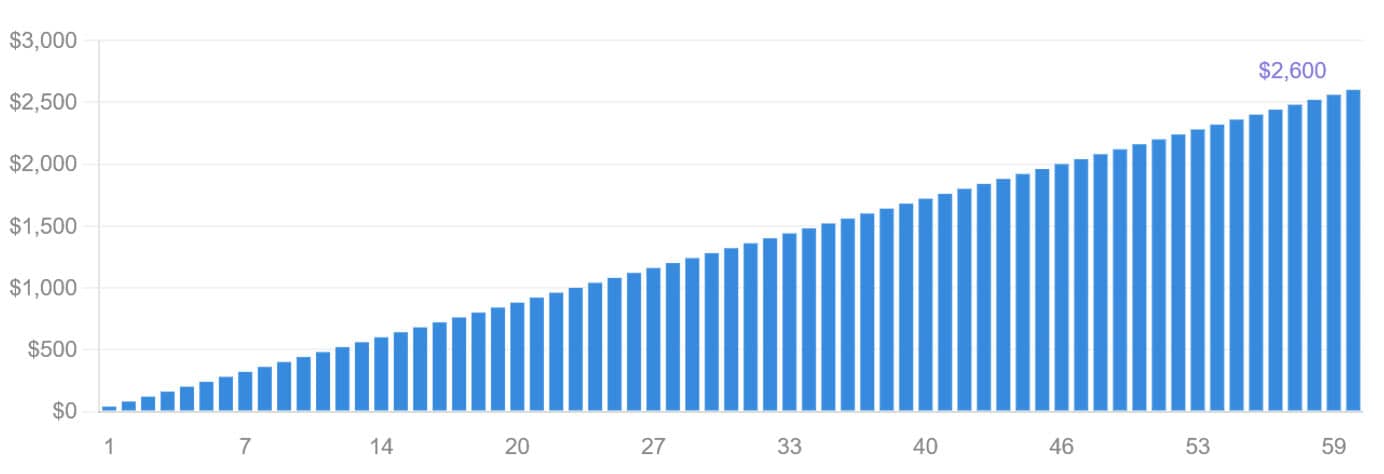
“Saving” means setting money aside instead of spending it right away. This is how you plan to reach big goals! Let’s say you save $10 per week. It doesn’t sound like much, but if you are consistent, over time it can grow to material amounts. Consider the following chart of the cumulative amount of saving $10 per week for 5 years:
You might save for:
- A new bike or skateboard
- A computer or gaming setup
- A family vacation or summer camp
- College or your first car when you’re older
Awesome Fact: Many experts suggest saving 10-30% of the money you get. A variety of long-term studies demonstrate that people who develop this discipline early in life are more successful in all areas of life. By training your brain to choose long-term wins over short-term impulses is an important part of positioning yourself for success. In other words, learn to climb the hills of life early and you’ll master the mountains of life later!
Giving: Helping Others
“Giving” means sharing some of your money to help people or causes you care about. It’s one of the best feelings ever!
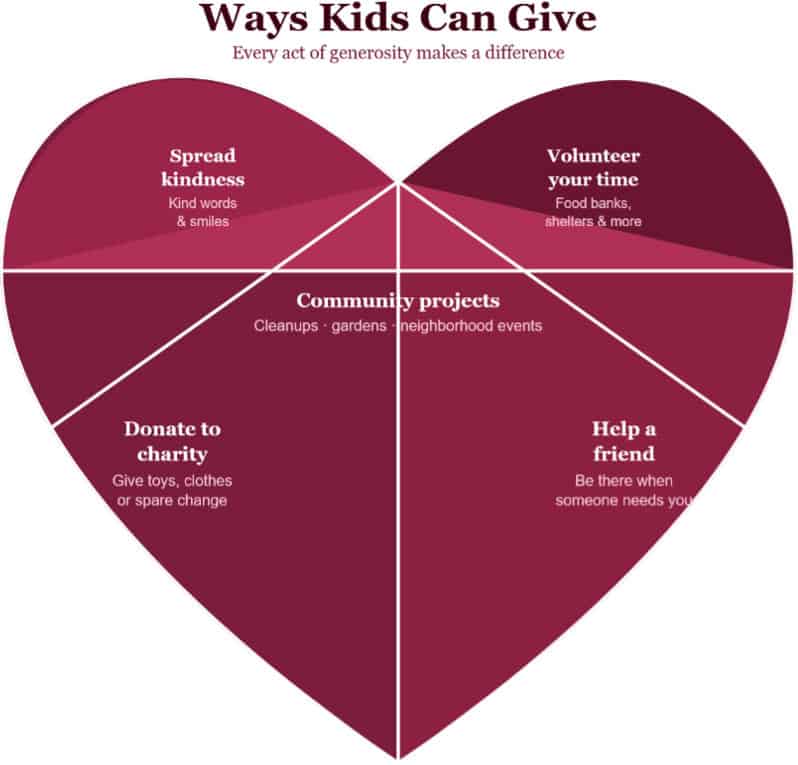
Ideas for giving:
- Donating to animal shelters
- Helping a local food bank
- Giving to a church, school fundraiser, or disaster relief
- Buying a gift for someone who needs it
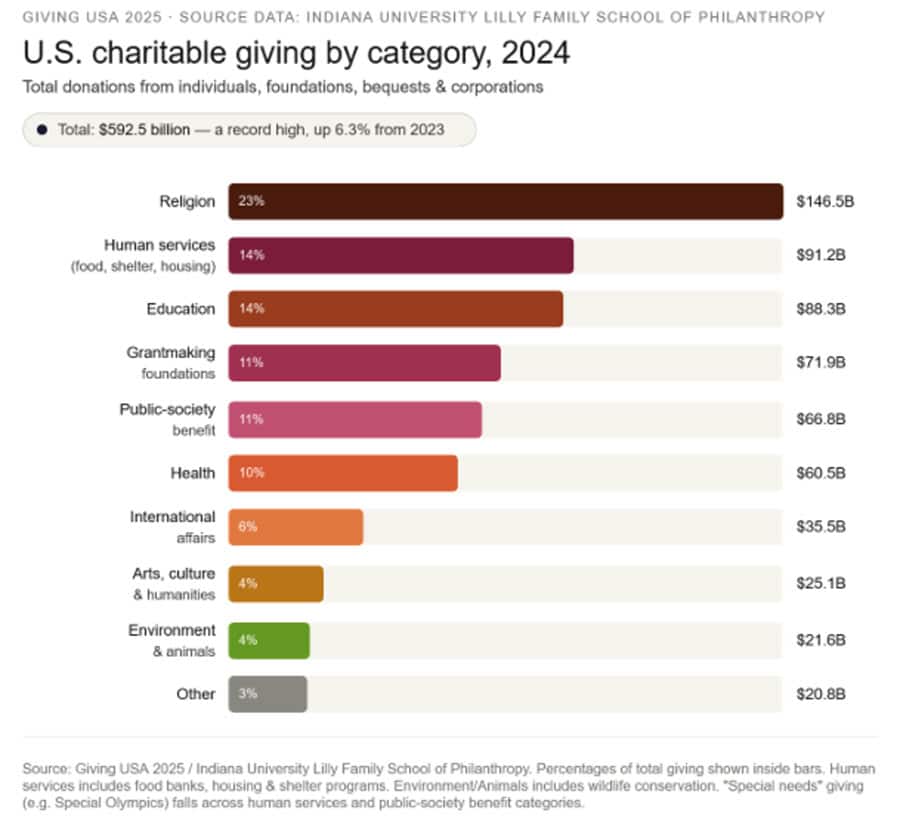
Inspiring Data: You won’t be alone. Americans give hundreds of billions of dollars to charity every year helping to meet a wide range of unmet needs. Even small amounts from kids add up and can make a real difference!
Balancing the Four Jobs: Your Money Superpower
The secret to being great with money isn’t doing just one job – it’s balancing all four!
A popular idea of how to allocate the money you’ve earned is the 50/30/20 rule (adjusted for kids): About 50% spending, 30% saving, 20% giving.
When you balance these jobs, you can:
- Enjoy today without running out of money
- Position yourself to achieve big dreams later
- Invest in and strengthen your community
- Become more independent as you grow up
- Internalize the fundamental traits that lead to success in your life as well as in your community.
Get Started Today!
Grab a notebook and 3 jars (or 3 envelopes). In the notebook, record how much money you earn each day with a simple journal entry. Write the date, the amount earned, and the source (allowance, babysitting, car washes, etc.). This journal becomes the “official” record book for all your earnings. Your journal will look something like this:
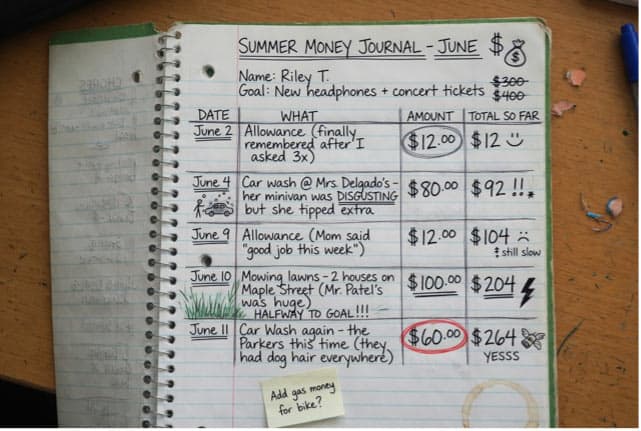
Now take the money you have earned and distribute it to the three jars. Jar number 1 is for money that you may spend. Transfer 50% of that day’s earnings into the ‘Spending’ jar or envelope. Using the data from the student Riley T. above, this student earned $264 in 10 days. So, Riley should transfer $132 to the ‘Spending’ jar. Then, transfer $80 (about 30%) to the ‘Savings’ jar. Finally, transfer $52 (about 20%) to the ‘Giving’ jar. So, every time you get money, you decide where it goes. This takes discipline. As these jars fill up, you know exactly how much money you have available for each of these important activities in your life.
Money isn’t just for toys – it’s a tool that can help you live an awesome life, make you financially independent and make the world better. Start practicing now, and by the time you’re an adult with a real job, you can be a money master!
Will you be the type of person that becomes self-sufficient or will you rely on others to hold your hand forever? Will you be the type of person that actually makes the world a better place? Or will you just talk about it? The choice is yours. Now you know how to get started. So get started. You’ve got this!
Related Articles

For Kids: How to Save Money
Budgeting,
Personal Finance,
March 18, 2025

Unlocking the Secrets of Investing: Making Your Money Grow on Autopilot
Investment Principles,
March 26, 2026

How does FOMO negatively impact my investment results?
Investment Principles,
Personal Finance,
Top Investor Mistakes,
Top Personal Finance FAQs,
January 8, 2025